

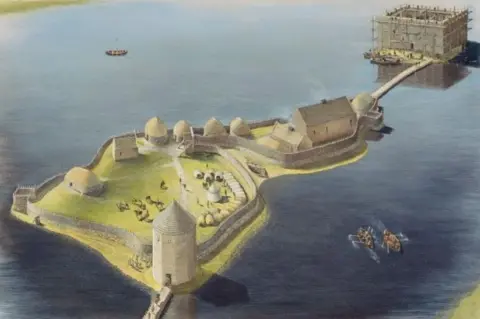
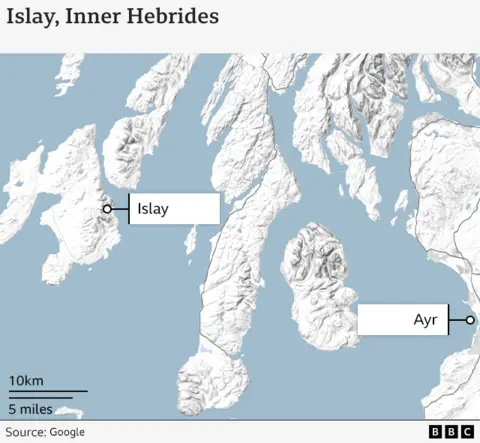
A long-forgotten fortress unearched on a Scottish isle could have sheltered monarchs who once governed large areas of the Highlands and islands.
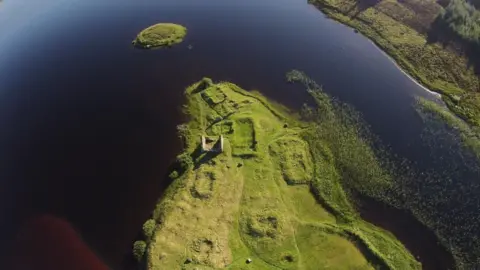
Researchers believe the fortification, established spanning two land masses within a loch at the location, belonged to royalty some 700 years previously.
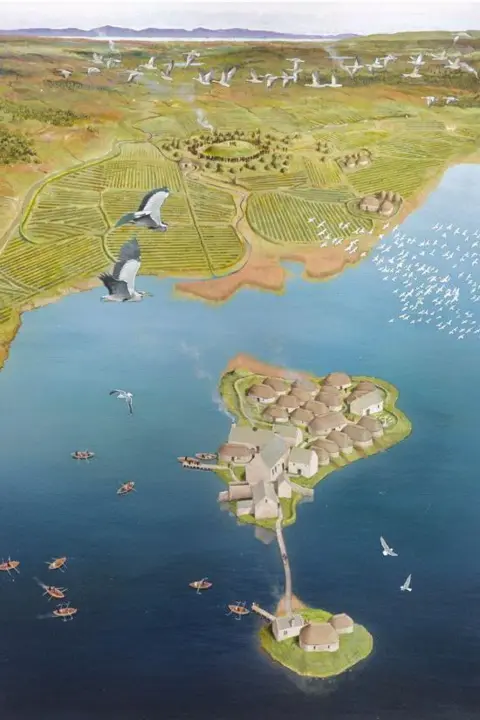
Subsequent rulers comprised MacDonald clan chiefs who earned the title of the Lords of the Isles.
They turned this location into a center of power from which they controlled the island chain, mainland territories and areas within the Scottish northwest.
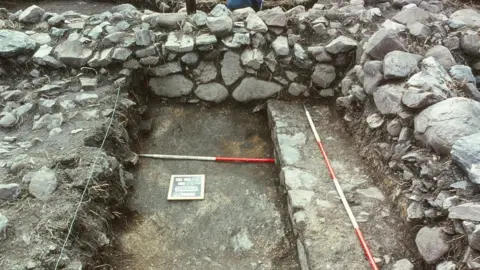
Archaeologists have spent nearly 30 years studying the site to develop a deeper understanding of its place in the domain of the clan leaders, as well as the area’s prior uses.
Evidence of a castle were uncovered and placed in the 1100s and 1200s, prior to the lords became dominant.
The structure included a rectangular central building like those built within well-defended castles in northern England, Bamburgh and Lancaster.
The structure included residential areas, open areas, food preparation zones, a feasting room where gatherings occurred and a religious space with an nearby burial ground.
Researchers stated that Norman-inspired kings in these regions were recognized for erecting stone structures, and they proposed that Finlaggan's was constructed as a display of power and resources.
The fortress was likely dismantled because it was weakened or compromised during raids.
A grand building was subsequently constructed on the exact location for the Lord of the Isles.
The MacDonald chiefs considered themselves sovereigns and believed they were counterparts of other royalty.
They conducted military campaigns in mainland Scotland and targeted sites such as Urquhart Castle on the banks of a Scottish loch.
In a recent publication, experts declared that Finlaggan was the lords' main center of power.
The publication has been published by a historical organization.
A lead researcher headed a team of experts and volunteers in discovering additional details about Finlaggan.
"Review of all the data that was assembled has been a major part of my life since the last decades, and I trust I have not only offered an report of importance but also a starting point for others to carry out additional study in the future."
A senior figure stated that the society’s goal was to disseminate knowledge of the past as extensively as possible.