

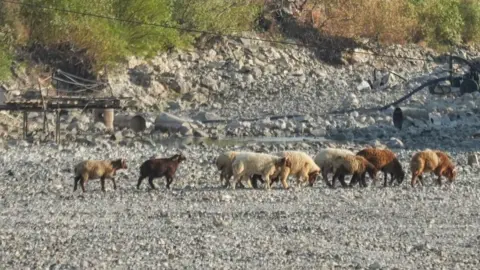
Near a rural area by the city of Hama, wheat fields ought to be ripe and productive with grain.
However, Maher Haddad's land sits barren, yielding just a third of its typical yield.
"Recently was catastrophic because of the lack of rain," remarked the middle-aged grower.
His acres generated only 190kg per dunum—significantly less than the 400-500kg harvested in a good year.
"{We lost what we spent; we've faced losses. There's no way to fund next season's crops," he continued.
With two young daughters to provide for, he is borrowing assistance from relatives to get by.
Widespread Crisis
The plight is seen across the country, where the most severe dry period in many years has cut crop yields by a significant portion.
A anticipated wheat shortfall of 2.73 million tonnes looms this season—enough to feed the yearly dietary needs of over 16 million people.

Growing Hunger
Lacking additional assistance or the ability to import wheat, the crisis may intensify dramatically.
Approximately 14 million Syrians—nearly 60% the public—currently find it hard to eat enough.
Among them, millions endure serious malnutrition, with a significant number in dire conditions.
Rainfall has dropped by about a large percentage, devastating three-quarters of rain-fed agricultural land.
"It represents the line between households being able to stay in their villages or being forced to leave," noted an official.
Daily Hardships
Farming families are parting with animals to make up for reduced earnings, cutting back their meals.
Hunger-related issues levels among young ones and pregnant women are increasing.
Wheat is a staple crop in Syria, the main ingredient in flatbread and noodles—affordable necessities that are now increasing in price.
In the case of a widow who is 39, affording staples has become increasingly difficult.
With six kids, she depends on her older sons' wages, which fall short of essential expenses.
"Occasionally we resort to funds simply to purchase bread," she said.
Earlier, a package of flatbread cost 500 money, but now it is four thousand five hundred.
To provide for her household, she requires two units a day—a cost of nine thousand currency units, excluding other items.
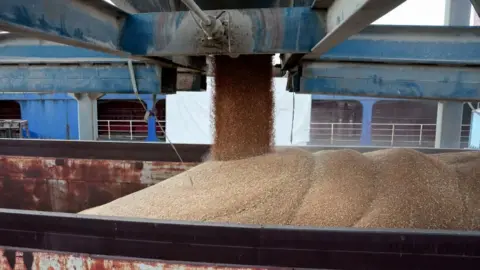
National and Foreign Actions
This situation creates a major challenge for the administration, which is attempting to rebuild the economy after over a decade of war.
Support organizations are providing bread subsidies for those at risk, but officials caution that these are temporary fixes.
"Efforts are underway to help people in the agricultural sector," said a program director.
Direct payments have been given to local growers who experienced all of their yield.
Yet, after over a decade of conflict, Syria's farming sector was already impacted by economic downturn, damaged irrigation systems, and unusable land.
Irrigation Problem
In critical agricultural areas, crop fields need several watering sessions per season, but due to absence of rainfall, most growers cannot sustain.
"The agricultural worker's main worry is obtaining irrigation," said a regional official.
Water needs fuel, and expenses have increased sharply, hitting 11,000 to twelve thousand pounds per unit.
Soaring fuel prices and frequent outages have made irrigation systems unaffordable for most agriculturalists.
Sustainable Measures
A goal for the government is developing water systems—such as renewable energy drip systems—to make resources more available.
But such plans need long-term investment and money—advantages that agricultural workers lack right now.
Thus, for millions Syrians around the country, there is only one option to do in the upcoming months: wait for precipitation.